Ministry of Peace
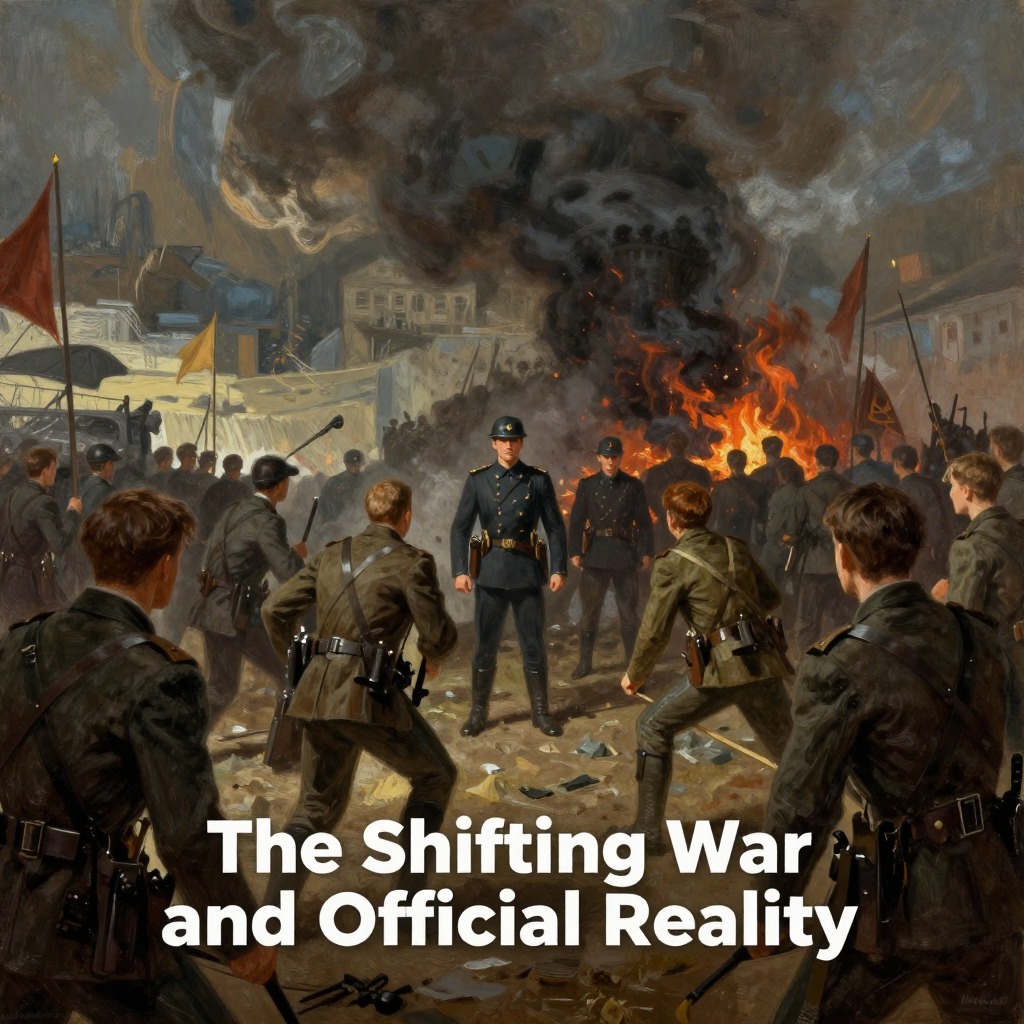
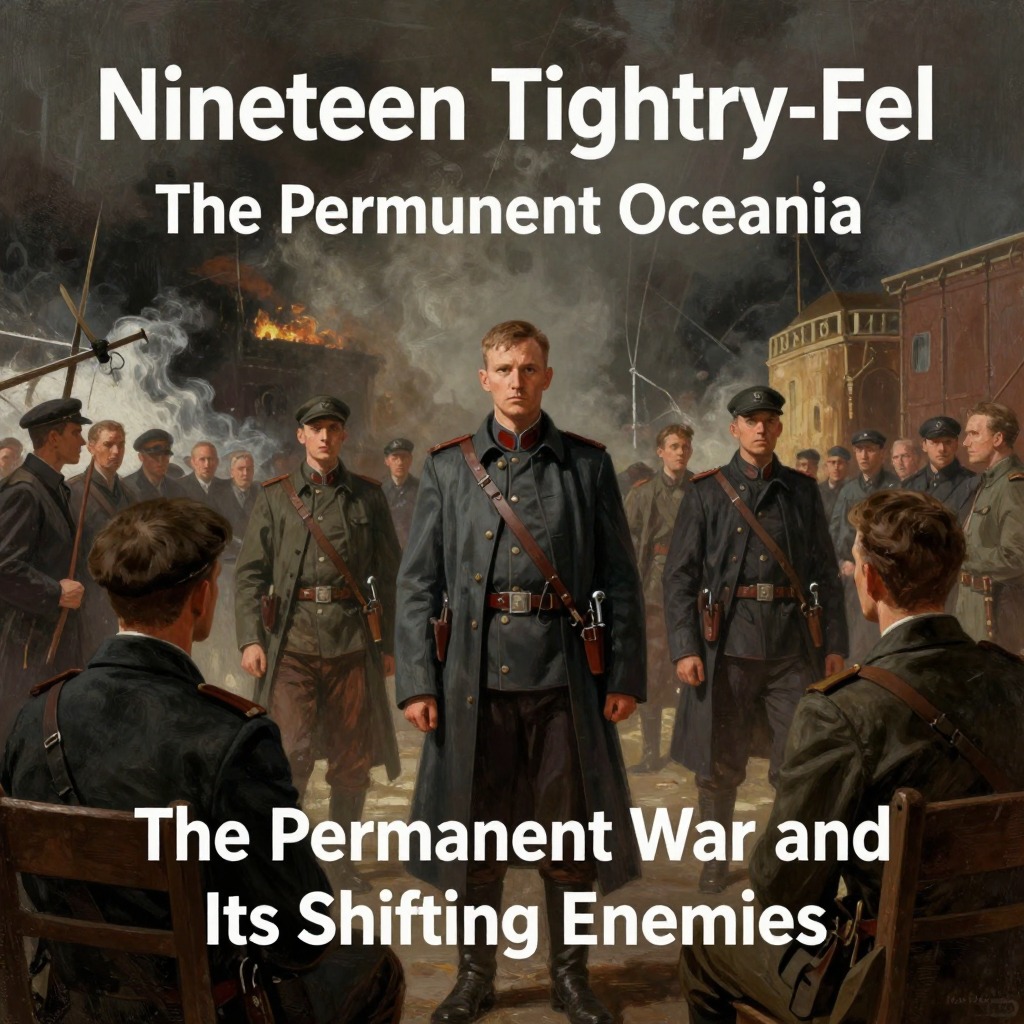
Ministry of Peace, known in Newspeak as Minipax, is one of the four ministries between which the entire apparatus of government in Oceania is divided, and the one whose official title reverses its actual function: it concerns itself with war. It is housed in one of the four enormous pyramidal buildings scattered about London, each so huge that all four can be seen at once from the roof of Victory Mansions, dwarfing the bombed and decaying city around them. In the same administrative scheme in which the Ministry of Truth supplies news, entertainment, education and the fine arts and the Ministry of Love maintains law and order, the Ministry of Peace directs the fighting that keeps Oceania in a permanent state of emergency.
The Ministry That Wages War
Winston Smith is never shown entering the Ministry of Peace; its operations reach him as distant crashes of rocket bombs, overfulfilment figures and news bulletins. Yet its presence is built into the detail of the world. The fictitious Comrade Ogilvy, invented by Winston at his desk in the Records Department and written into a speech by Big Brother, is credited with a hand grenade adopted by the Ministry of Peace, a weapon whose first trial kills thirty-one Eurasian prisoners; the ministry thus receives even the inventions of forgery. The official account of Oceania's war, set down in Emmanuel Goldstein's The Theory and Practice of Oligarchical Collectivism, fills out the picture: the Ministry of Peace keeps vast laboratories and experimental stations hidden in the Brazilian forests, the Australian desert and lost islands of the Antarctic, where experts devise ever larger rocket bombs, deadlier gases, soluble poisons, disease germs immunised against antibodies, and even artificial earthquakes and tidal waves.
The same book describes the Floating Fortress, the almost unsinkable warship that guards strategic spots on the sea lanes; it locks up the labour that would build several hundred cargo ships and is finally scrapped as obsolete without ever having brought material benefit to anybody. This is the economic heart of the ministry's work: continuous warfare that consumes the surplus of production without raising the standard of living.
Name, Newspeak and Doublethink
Minipax is the purest example of the Party's habit of calling things by the names of their opposites. As Winston learns from Emmanuel Goldstein's book, the names of the four Ministries exhibit a deliberate impudence: the Ministry of Peace concerns itself with war, the Ministry of Truth with lies, the Ministry of Love with torture and the Ministry of Plenty with starvation, and these contradictions are not accidental but deliberate exercises in doublethink. In the Appendix on Newspeak, the abbreviation of names is described as narrowing and subtly altering their meaning: a phrase like Ministry of Peace clings to associations of universal brotherhood, while Minipax suggests merely a tightly-knit organisation, a word that can be uttered almost without thought and rouses the minimum of echoes in the speaker's mind.
Narrative Role
In the final pages of the novel the Ministry of Peace becomes the source of the telescreen bulletins that frame Winston's last days. A special announcement warns of a Eurasian army moving southward through Africa, with Brazzaville and Leopoldville in danger; then, in the Chestnut Tree Café, a trumpet call introduces a bulletin of total victory, a vast seaborne armada, half a million prisoners, and control of the whole of Africa. Winston, sitting at his reserved corner table with the chess problem before him, absorbs the victory as the long-hoped-for bullet entering his brain, and it is after this that he finally loves Big Brother. A ministry named for peace has supplied the lie that reconciles him to the Party.